
Table of Contents
Spring in Central Indiana doesn’t ease. April and May stack rain on top of snowmelt, the ground stays waterlogged for weeks, and every basement in Hendricks County quietly depends on one small pump to hold the line. Most homeowners don’t think about their sump pump until water is already on the floor. By then, the damage is underway.
That’s what makes spring failures so frustrating. A pump that’s on its way out almost always shows warning signs first. The problem is those signs are easy to explain away, especially when the pump still seems to be running. After more than 40 years of sump pump repair and inspection calls across the Indianapolis area, we’ve seen the same patterns repeat year after year. Three of them show up in the majority of spring basement flooding calls we get.
Sign 1. Pump Runs Nonstop, Cycles Rapidly, or Won't Start
These three problems look different on the surface. In practice, they often share the same root cause. It happens more often than people expect.
The float switch sits inside the sump pit and rises with the water level. When water reaches a certain level, the pump starts. Once the pit clears, the float drops and the pump shuts off. It’s a simple mechanism. It’s also the most common failure point we see heading into spring.
When the signs that your sump pump is failing start to appear, this is usually where it begins. A float switch stuck in the “on” position keeps the pump running even when the pit is empty. The motor runs hot. It wears faster than it should. A sump pump running constantly like this is burning through its lifespan every hour it operates. On the flip side, a float switch stuck in the “off” position means the sump pump won’t turn on when the water level rises. The pit fills up. Water climbs past where the pump should have kicked on. You don’t find out until you walk downstairs. By then, it’s too late.
A third failure pattern is rapid on/off cycling. If the pump turns on and off every few seconds, the float may be stuck in mid-position, or water may be draining back into the pit after each cycle because the check valve has failed. That constant restart cycle burns out the motor faster than almost anything else.
A quick way to test things before spring rain season peaks is to pour a bucket of water slowly into the sump pit. The pump should activate within a few seconds, clear the water, and shut off cleanly. If it runs without stopping, doesn’t start at all, or cycles rapidly on and off, something is wrong. Most homeowners don’t catch it until it’s already a problem. A professional sump pump inspection makes sense before the next storm rolls through.
There’s one more thing worth watching for. If the pump hums but the water level in the pit never drops, the impeller is likely seized or the motor is drawing power without actually turning. The pump sounds like it’s working. It isn’t.
Sign 2. Strange Noises or Visible Rust on the Unit
If your sump pump is making noise, don’t assume it’s normal. A steady low hum during operation is expected. Grinding, rattling, or banging sounds are not. These are typically a sign something internal has already broken down. It’s easy to ignore early on.
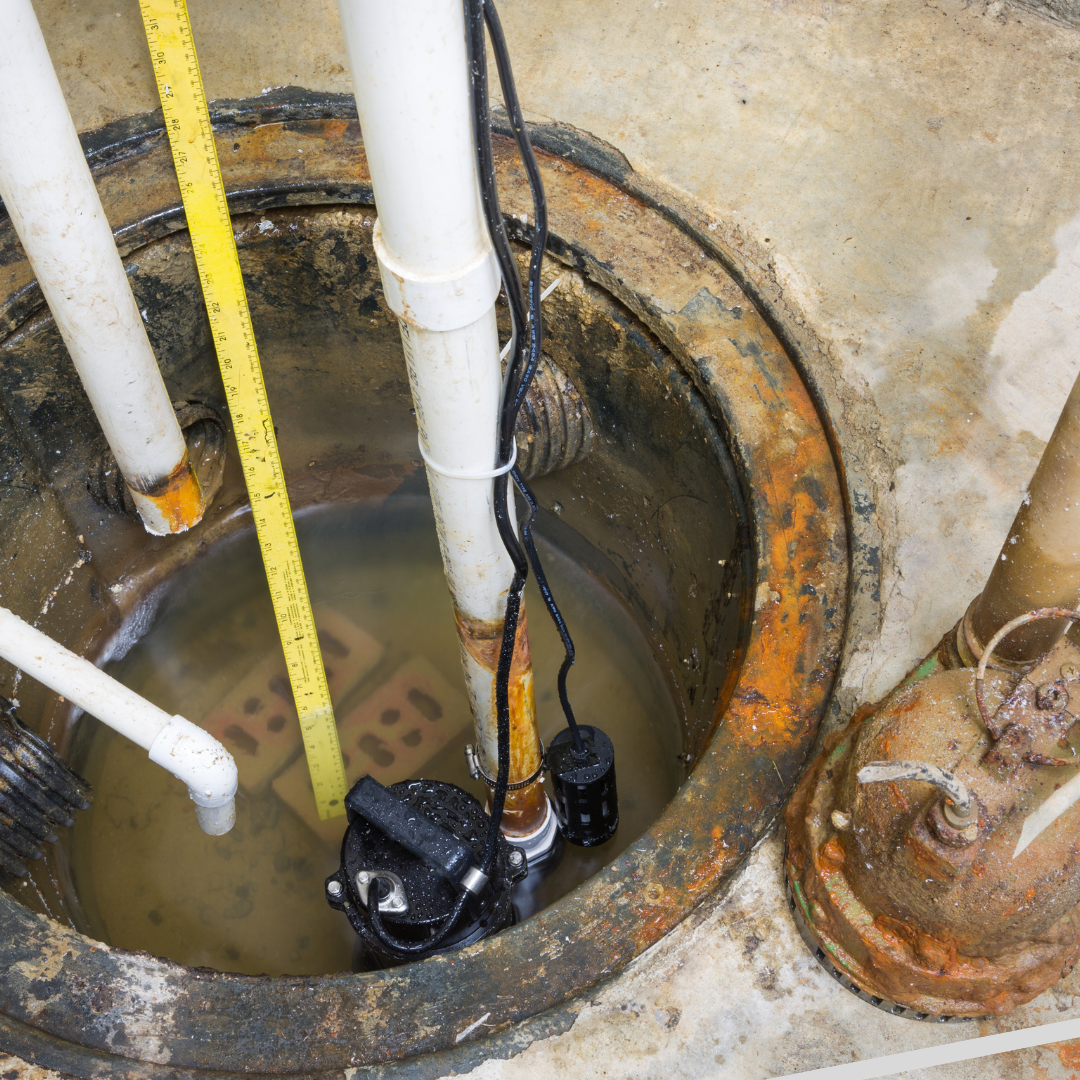
Grinding almost always points to impeller damage. The impeller is the rotating component inside the pump housing that moves water through the discharge pipe and out of the house. Over time, gravel, sediment, and small debris from the pit are pulled into the housing and wear down the impeller blades. Once damaged, the pump works harder to move less water. During sustained spring rain in Indiana, saturated soil can push groundwater toward the foundation for hours. A damaged impeller usually can’t survive that kind of sustained demand.
Rattling or vibration during operation usually indicates that something has come loose inside the unit or that the pump has shifted off its base. That physical imbalance can interfere with the float switch, causing erratic on/off behavior that appears to be an electrical issue but is actually mechanical.
Visible rust is worth taking seriously, too. Light surface oxidation on an older unit is one thing. Heavy corrosion around the motor housing or the discharge pipe connections is another matter entirely. On units with a battery backup, battery acid can speed up corrosion around nearby parts. Check that area as well.
If the pit also produces a musty or sour odor, water has likely been sitting stagnant for extended periods. That points to a pump that isn’t activating on schedule.
A pump showing two or more of these signs at once deserves a professional look, regardless of age. If the unit is already approaching 7 to 10 years old, the conversation shifts from repair to whether replacement is the better investment.
Sign 3. The Pump Runs But Can't Keep Up With the Water
This is the sign that catches the most people off guard. The pump turns on, makes noise, eventually shuts off. But the water level in the pit never fully drops, or it falls briefly and climbs right back up the moment the pump stops. These are some of the most common sump pump problems after rain, and they’re easy to misread as normal behavior. During a multi-hour spring storm, that lag is enough to send water over the top of the basin and across the basement floor.
This is where things usually start to go wrong for homeowners who thought their pump was fine.
A blocked or frozen discharge line is the most common reason. The discharge pipe carries water from the pit to an exit point outside, typically several feet from the foundation. If that pipe is partially clogged or frozen earlier in the season and didn’t fully clear, the pump has nowhere to send the water. It runs, the motor works, but nothing actually drains. This is the classic sump pump short cycling problem. The pump runs, but water doesn’t drain, the basin refills, and the cycle repeats until the pit overflows.
Pump capacity is the other factor worth considering. A unit that handled conditions without trouble a few years ago may not be enough today. Drainage patterns shift over time. Nearby construction changes how water moves across the lot. Some pits are simply undersized for the volume coming in during a heavy Indiana spring. Sump pumps are rated by gallons per minute. When the water entering the basin regularly outpaces what the pump can move, no amount of maintenance can close that gap.
This is also where battery backup becomes critical. Spring storms in Central Indiana routinely knock out power at exactly the wrong moment. A primary pump that loses power mid-storm is useless, no matter how well it was working an hour earlier. A battery backup sump pump keeps water moving through any outage. It’s one of the most practical upgrades a homeowner can make before spring arrives. If your current setup doesn’t include one, now is the right time.
For homes with a crawl space rather than a finished basement, these same problems apply and are often harder to catch early. Water intrusion in a crawl space can go unnoticed for weeks. By the time it becomes visible, mold and structural damage have usually already set in.
Schedule a Sump Pump Inspection Before Spring Peaks
If any of the above sounds familiar, the right move is getting ahead of it now. A sump pump inspection in Central Indiana takes less than an hour and covers the float switch, check valve, impeller, discharge pipe, pump motor, and battery backup. It gives you a clear picture of what’s working and what isn’t, so you can decide on sump pump repair or replacement before a storm makes the decision for you.
Justin Dorsey Plumbing has served homeowners across the Indianapolis area for more than 40 years, including Danville, Greencastle, Brownsburg, Mooresville, and Plainfield. We offer 24/7 emergency service with no overtime charges, so if a spring storm catches you off guard, you’re not stuck waiting until Monday morning.
Need sump pump repair in Indianapolis or want to schedule a sump pump inspection in Central Indiana before the next heavy rain? Call us at 317-745-4830 or request service online. We’ll make sure your pump is ready for whatever spring brings.
FAQs
What are the signs your sump pump is failing?
A sump pump running constantly without clearing the pit, a pump that won’t turn on when water rises, rapid short-cycling, grinding or rattling during operation, visible rust on the unit or its connections, and water that stays in the pit or returns quickly after the pump shuts off. Any one of these is worth having checked before the heaviest spring rains arrive.
Why does my sump pump keep running after it rains?
A sump pump running constantly after rain usually has a float switch stuck in the “on” position. A failed check valve can also let water flow back into the pit after each cycle, triggering the pump to restart almost immediately. Both situations accelerate motor wear and can lead to full sump pump failure during a storm.
What causes a sump pump to hum but not pump water?
A pump that hums without moving water usually has a seized impeller or a motor drawing power without actually turning. This typically happens when debris gets lodged in the pump housing or when the motor has worn past the point where it can drive the impeller. The unit needs to be inspected and, in most cases, replaced.
How often should a sump pump be inspected?
Once a year is the standard recommendation, and early spring is the best time to do it. An inspection should cover the float switch, check valve, discharge pipe, pump motor, and battery backup. Catching a weak component before the heaviest rain arrives costs far less than dealing with a flooded basement.
Do I really need a battery backup sump pump?
For homeowners in Central Indiana, yes. Severe spring storms here regularly bring power outages at exactly the wrong time. A battery backup sump pump keeps water moving even when the primary pump loses power. If your basement has ever taken on water during a storm-related outage, adding a backup is one of the most practical decisions you can make.
My sump pump is 8 years old and still seems to work. Should I replace it?
The average sump pump lifespan falls between 7 and 10 years, depending on how hard the unit has been working. A pump approaching that range is worth inspecting, even if it seems fine. Components wear gradually, and a unit that passes a basic test in March may not hold up through a full week of heavy April rain. A licensed plumber can assess its actual condition and walk you through whether repair or replacement makes more sense.
What is the difference between sump pump repair and replacement?
Repair makes sense for isolated component failures on an otherwise sound unit. Think a stuck float switch, a clogged discharge line, or a failed check valve. Replacement is the better option when the motor is failing, the unit is past its expected service life, or repair costs are close to what a new pump would run. A plumber can walk you through both options after a proper inspection.